AI Disclaimer: This platform utilizes AI to summarize breaking news and may contain inaccuracies or errors. As the platform grows, we intend to add more human oversight and pursue justice while minimizing AI involvement.
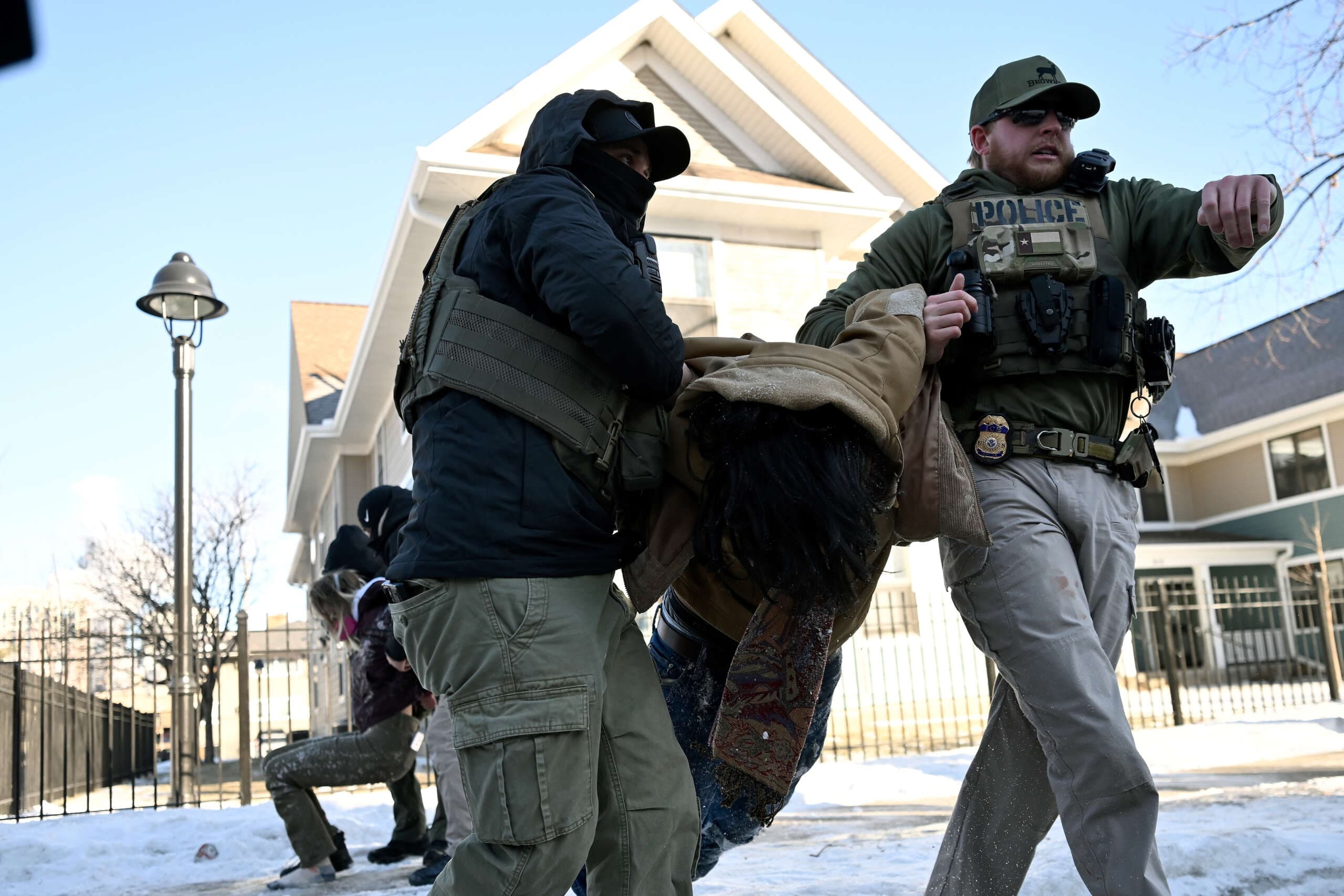
An internal memo signed by ICE Acting Director Todd Lyons reveals that federal immigration enforcement agents are claiming broad new powers to carry out warrantless arrests, allowing them to detain people they suspect are undocumented immigrants without a warrant.
The memo expands the ability of lower-level ICE agents to carry out sweeps and arrests, rather than targeted enforcement operations, by redefining the standard for warrantless arrests to include individuals who are "unlikely to be located" after an encounter.
Scott Shuchart, former head of policy at ICE, warned that the memo "bends over backwards" to give ICE agents "green lights" to make arrests without supervisor approval, effectively granting them unfettered power.
Claire Trickler-McNulty, former senior adviser at ICE, noted that the memo's language is so broad that it would allow ICE to arrest "essentially anyone" without a warrant, rendering the concept of obtaining a warrant "pointless".
Aaron Reichlin-Melnick, senior fellow at the American Immigration Council, argued that the memo is an attempt by ICE to "get around" court orders requiring them to follow the law, which states that administrative warrantless arrests are only for individuals "likely to escape".
The memo has been criticized by experts, including Stanford University political scientist Tom Clark, who questioned its validity and pointed out that it directly conflicts with the Fourth Amendment of the US Constitution, which protects against "unreasonable searches and seizures".
The expansion of ICE's arrest powers has sparked concerns about the erosion of civil liberties and the potential for increased racial profiling and discrimination against immigrant communities.